
The Science Behind Relationship Compatibility
DNA Romance predicts "chemistry" online using the DRom 1.0 algorithm. It assesses 100 specific markers within your DNA - focused on genes proven to be involved in attraction and reproduction. Studies have shown that people with varied DNA markers in the Major Histocompatibility Complex (MHC) tend to find each other's scent appealing and often enjoy more durable romantic relationships.
DRom 1.0 - Predicting Chemistry

DNA Romance also forecasts personality compatibility using Myers-Briggs personality types, lets users evaluate shared common interests via filters, and physical attraction based on photographs.
Our second algorithm, DRom 2.0, uses an AI model trained with relevant DNA markers to predict phenotypic traits with high accuracy - complementing the profile-verification mechanism that checks user authenticity.
Personality Compatibility Rating
How Different Personality Types Interact in Relationships
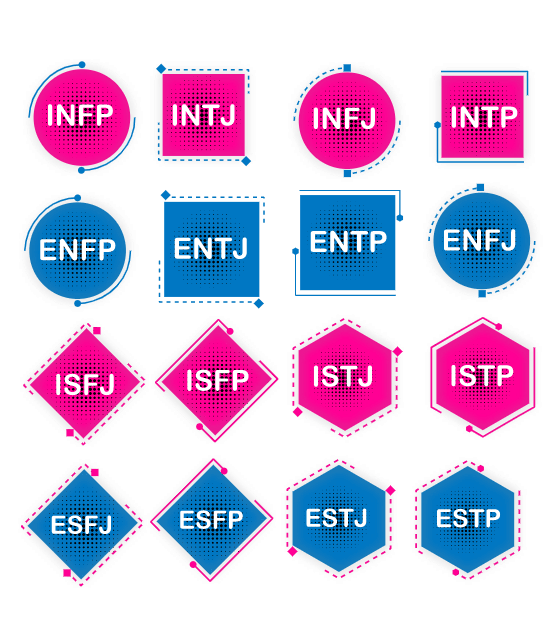
Our personality compatibility rating draws on the Jung / Myers-Briggs 16 personality types a psychometric framework with over a century of development. Carl Jung's 1921 work was refined by Isabel Briggs Myers and Katherine Briggs into the Myers-Briggs Type Indicator®, widely used today in organisational psychology.
DNA Romance applies this framework to predict potential connections between singles and couples - assigning higher compatibility scores to similar personality types, lower scores to those that tend to conflict.
Key Research Papers
Selected peer-reviewed studies underpinning the science behind DNA Romance.
Dandine-Roulland et al., 2019
Dandine-Roulland C, Laurent R, Dall'Ara I, Toupance B and Chaix R (2019)
Genomic evidence for MHC disassortative mating in humans
Proceedings of the Royal Society B
Couples in Northern Europe tend to exhibit MHC dissimilarity, suggesting biological influence on mate choice. Cultural and social factors elsewhere may obscure the biologically-driven pattern.
Birnbaum et al., 2019
Birnbaum GE, Zholtack K, Mizrahi M & Ein-Dor T (2019)
The Bitter Pill: Cessation of Oral Contraceptives Enhances the Appeal of Alternative Mates
Evolutionary Psychological Science 5, 276–285
Hormonal contraceptives shift mate preferences. Stopping use reverts those preferences and enhances attraction to genetically compatible men, especially during high-fertility phases.
Wedekind, 2019
Wedekind C (2019)
Proc. R. Soc. B 285:20172714
Re-analysis of MHC-and-odour data showing odour pleasantness and intensity interact with MHC dissimilarity to influence social signalling - a more nuanced relationship between MHC, scent perception, and communication than earlier studies suggested.
Henningsson et al., 2017
Henningsson S et al. (2017)
Major histocompatibility complex (MHC) and sexual mate selection
Translational Psychiatry 7:e1118
Systematic look at MHC and sexual selection in humans, evaluating the relationship between HLA genotype and partner choice across modern populations.
Christakis & Fowler, 2014
Christakis NA, Fowler JH (2014)
Friendship and natural selection
PNAS 111(suppl 3): 10796–10801
Friends share genetic similarity comparable to that of fourth cousins. Suggests social bonds form along subtle biological gradients, not only shared environment - relevant to how romantic compatibility extends beyond MHC.
Garver-Apgar et al., 2006
Garver-Apgar CE, Gangestad SW, Thornhill R, Miller RD, Olp JJ (2006)
Psychological Science 17:830-835
Couples with greater MHC similarity reported reduced sexual responsivity and higher rates of infidelity - direct behavioural correlate of MHC compatibility within established relationships.
Roberts et al., 2006
Roberts SC, Gosling LM, Carter V, Petrie M (2006)
MHC-correlated odour preferences in humans and the use of oral contraceptives
Proc. R. Soc. B 275:2715-2722
Women's MHC-correlated odour preferences invert when on hormonal contraceptives - they shift toward MHC-similar partners rather than MHC-dissimilar ones.
Wedekind & Furi, 1997
Wedekind C, Furi S (1997)
Proc. R. Soc. B 264:1471-1479
Follow-up to the classic t-shirt study. Men and women evaluated odour samples from MHC-typed donors; preferences fell on MHC-dissimilar partners more often than chance - but the underlying signal favours heterozygosity rather than specific allele combinations.
Wu et al., 2018
Wu K, Chen C, Moyzis RK, Nuno M, Yu Z and Greenberger E (2018)
Evolution and Human Behavior. 39(4):447-456.
In a speed-dating context, women, but not men, showed preferences for partners based on Major Histocompatibility Complex (MHC) complementarity through SNP analysis, with different SNPs influencing attraction directionally based on proximity to major HLA genes, and MHC-based indices held comparable influence to self-reported personality attributes in predicting second date offers for both genders.
Burger et al., 2017
Burger D, Meuwly C, Marti E, Sieme H, Oberthür M, Janda J, Meinecke-Tillmann S and Wedekind C (2017)
MHC-correlated preferences in diestrous female horses (Equus caballus)
Theriogenology. 89:318-323.
This study investigated the influence of the Major Histocompatibility Complex (MHC) genes and testosterone levels on female horse mating preferences, finding that mares demonstrated elevated interest towards MHC-dissimilar stallions during their diestrous phase (non-reproductive period), but other non-MHC linked male characteristics, possibly like physical attributes or behavioural cues, could override MHC influences during their estrous (reproductive) phase, with the context and cycle phase being pivotal in mate choice.
Sherlock et al., 2016
Sherlock JM, Sidari MJ, Harris EA, Barlow FK, Zietsch BP (2016)
Testing the mate-choice hypothesis of the female orgasm: disentangling traits and behaviours .
Socioaffect Neurosci Psychol. 6:31562.
The study suggests that women experience varying orgasm frequencies with different partners, with those inducing higher orgasm rates being perceived as more humorous, creative, warm, faithful, and better-smelling, and also being more attentive to their partner's sexual satisfaction, partially supporting the mate-choice hypothesis of female orgasm which posits it as a potential mechanism for selecting high-quality mates.
Kromer et al., 2016
Kromer J, Hummel T, Pietrowski D, Giani AS, Sauter J, Ehninger G, Schmidt AH, Croy I (2016)
Influence of HLA on human partnership and sexual satisfaction .
Sci Rep. 6:32550.
The study indicates that in humans, HLA (a genetic component of the immune system) dissimilarity can influence mate selection and sexual satisfaction, potentially through the detection of olfactory cues related to genetic compatibility, similarly to mechanisms observed in other animals, promoting genetic diversity and resilience against pathogens in offspring.
Wlodarski and Dunbar., 2015
Wlodarski R. and Dunbar RIM. (2015)
What’s in a Kiss? The Effect of Romantic Kissing on Mate Desirability .
Evol Psychol. ; 12(1): 178–199.
This study found that perceived romantic kissing ability affects evaluations of potential mates, increasing desirability particularly for women in casual sex contexts, and while visual cues can override the impact of kissing-related information in certain mating scenarios, the influence of attractive visual information appears more potent for men than for women, alluding to the multifaceted role of kissing in conveying mate quality and desirability alongside other cues.
Burger et al., 2015
Burger D, Dolivo G, Marti E, Sieme H and Wedekind C (2015)
Proc. R. Soc. B 282:20150407
This study examines how the Major Histocompatibility Complex (MHC) influences male reproductive strategies in horses. The research revealed that when stallions were exposed to females with dissimilar MHC types, they exhibited higher testosterone levels and produced a larger number of sperm per ejaculate compared to when they were exposed to MHC-similar mares, highlighting that MHC-linked signals can indeed impact male testosterone production and semen characteristics, thereby influencing reproductive approaches.
Laurent and Chaix., 2012
Laurent R and Chaix R (2012)
BioEssays. 34(4):267-71.
.
Lie et al., 2010
Lie HC, Simmons LH and Rhodes G (2010)
Genetic dissimilarity, genetic diversity, and mate preferences in humans .
Evolution and Human Behavior 31:8–58.
This study explores the influence of genetic factors, particularly the major histocompatibility complex (MHC), on mate preferences in humans, discovering that males tend to prefer MHC-dissimilar females in both short-term and long-term mating contexts, while genetic diversity impacts both male and female partner preferences across different mating contexts, thus supporting a significant role for the MHC in human mate selection and suggesting that these preferences might function to enhance genetic diversity in offspring.
Lie et al., 2010b
Lie HC, Rhodes G and Simmons LH (2010)
Is genetic diversity associated with mating success in humans ?
Animal Behaviour. 79, 4:903-909
This study indicates that in humans, particularly females, genetic diversity, especially within the major histocompatibility complex (MHC), is associated with greater mating success, measured by the number of sexual partners, supporting the concept that genetic factors, potentially related to immune system functioning, play a role in human mating success, while no significant association was found in males.
Chaix et al., 2008
Chaix R, Cao C, and Donnelly P (2008)
Is Mate Choice in Humans MHC-Dependent ?
PLOS Genetics, 4 (9)
The study indicates that while European American populations may prefer MHC-dissimilar mates, selecting for diversity in offspring's immune systems, such a pattern is not found in the examined African population, suggesting MHC's influence on mate choice can be context-dependent and potentially shaped by various factors.
Schwensow et al., 2008
Schwensow N, Fietz J, Dausmann K, Sommer S (2008)
Evol Ecol. (22) 617-636
The study explores mate choice in the fat-tailed dwarf lemur, finding females prefer males with greater MHC-genetic diversity and lower MHC overlap as both social and genetic fathers, while overall genetic heterozygosity and relatedness do not significantly influence mate selection; extra-pair matings might occur to mitigate genetic incompatibility, highlighting a complex interplay of "good-genes-as-heterozygosity" and "disassortative mating" hypotheses in primate mating strategies.
Wedekind., 2007
Wedekind C (2007)
The Major Histocompatibility Complex and Perfumers’ Descriptions of Human Body Odors
Evolutionary Psychology.5(2): 330-343
This experiment reveals a connection between the Major Histocompatibility Complex (MHC) and the verbal descriptions of human body odors, demonstrating that professional perfumers can, to some extent, articulate MHC-correlated body odor components, underscoring the MHC's influence on human olfactory perception and possibly, mate selection, given the MHC's critical role in immune system functioning and previously noted impact on body odor and mate choice.
Wedekind., 2006
Wedekind C (2006)
The Intensity of Human Body Odors and the MHC: Should We Expect A Link ?
Evolutionary Psychology. 4:85-94
This research discerns relationships between a few MHC (Major Histocompatibility Complex) genes and the intensity and pleasantness of men's body odors, discovering that men with at least one homozygous MHC antigen don't emit notably more intense odors than heterozygotes, yet their scents are perceived as significantly stronger by women with dissimilar MHC.
Pause et al., 2006
Pause BM, Krauel K, Schrader C, Sojka B, Westphal E, Mu¨ller-Ruchholtz W, and Ferstl R. (2006)
Proc. R. Soc. B (2006) 273, 471–478 doi:10.1098/rspb.2005.3342
This study reveals that humans subconsciously detect and respond to body odors from individuals with similar HLA (Human Leucocyte Antigen) genetic markers, which might play a critical role in social interactions and mate selection by acting as subtle social signals within both same-sex and opposite-sex relationships..
Martins et al., 2005
Martins Y, Preti G, Crabtree CR, Runyan T, Vainius AA and Wysocki CJ (2005)
Preference for Human Body Odors Is Influenced by Gender and Sexual Orientation .
Psychological Science, 16(9) 694-702
This study demonstrates that sexual orientation and gender influence individuals' preferences for human body odors, with heterosexual and homosexual males and females showcasing distinct two-choice preferences when presented with body odors from individuals of different gender and sexual orientation combinations, implying that body odor can be a factor in sexual and social partner selection.
Horton et al., 2004
Horton R, Wilming L, Rand V, Lovering RC, Bruford EA, Khodiyar VK, Lush MJ, Povey S, Talbot CC Jr, Wright MW, Wain HM, Trowsdale J, Ziegler A, Beck S (2004)
Gene map of the extended human MHC.
Nat Rev Genet 5(12):889-899
This study characterises an integrated gene map of the extended human MHC, a pivotal region in the vertebrate genome for infection and autoimmunity due to its essential role in both adaptive and innate immunity, highlighting its significant content related to paralogy, polymorphism, immune functionality, and its association with various diseases, providing a comprehensive view stemming from the assimilation of data from several large-scale studies..
Jacob et al., 2002
Jacob S, McClitock MK, Zelano B and Ober C (2002)
Paternally inherited HLA alleles are associated with woman’s choice of male odour .
Nature Genetics, 30:175
This study demonstrates that women can discern differences in male body odor influenced by a single variance in HLA (human MHC) allele, with a woman's capacity to distinguish and prefer certain odors notably being based on HLA alleles inherited from her father and not her mother; this suggests that paternally inherited HLA-associated odors influence odor preference and might function as social cues, even despite a milieu of potential odors derived from a variety of genetic and cultural factors..
Milinski and Wedekind., 2001
Milinski M and Wedekind C (2001)
Evidence for MHC-correlated perfume preference in humans .
Behavioural Ecology 12(2):140-149
The study explores the relationship between Major Histocompatibility Complex (MHC) genotypes and perfume preferences in humans. They discovered a notable correlation between an individual's MHC (specifically HLA-A, -B, -DR) and their ratings of various scents for personal use, with certain HLA types (e.g., HLA-A2) showing consistent scent preferences. However, when it came to preferences for a partner's scent, the correlation was largely insignificant, aligning with the hypothesis that individuals select perfumes for personal use to possibly enhance or amplify their own immunogenetic revealing body odors, rather than to alter the perceived scents of their partners.
Wedekind et al., 1995
Wedekind C, Seebeck T, Bettens F And Paepke AJ (1995)
MHC-dependent mate preferences in humans.
Proc.R.Soc.Lond.B. 260:245-249.
This study found that people tend to prefer the body odors of potential mates who have different immune system genes than their own, but this preference changes for women on birth control.
Jokiniemi et al., 2020
Jokiniemi A, Magris M, Ritari J, Kuusipalo L, Lundgren T, Partanen J and Kekäläinen J (2020)
Post-copulatory genetic matchmaking: HLA-dependent effects of cervical mucus on human sperm function
Proc. R. Soc. B 287:20201682
* found that sperm viability was associated with partners' HLA dissimilarity, indicating that cervical mucus may selectively facilitate later gamete fusion between immunogenetically compatible partners
Mosaad et al., 2011
Mosaad YM, Abdel-Dayem Y, El-Deek BS and El-Sherbini SM (2011)
Association between HLA-E *0101 homozygosity and recurrent miscarriage in Egyptian women
Scand J Immunol. 2011 Aug;74(2):205-9. doi: 10.1111/j.1365-3083.2011.02559.x.
* found an increased frequency of homozygosity for HLA-E*0101 in Egyptian women with RM
Mora-Sánchez et al., 2019
Mora-Sánchez A, Aguilar-Salvador D, Nowak I (2019)
NPJ Digit Med Mar 7;2:12.
* proposed a genetic-risk calculation that could predict recurrent miscarriage (RM) based on analysing HLA haplotypes from couples either with histories of successful pregnancies or RM
Meuleman et al., 2015
Meuleman T, Lashley LE, Dekkers OM, van Lith J, Claas FH and Bloemenkamp KW (2015)
HLA associations and HLA sharing in recurrent miscarriage: A systematic review and meta-analysis
Hum Immunol. May;76(5):362-73.
* performed a meta-analyses of 41 studies and showed that HLA-B sharing and HLA-DR sharing were both associated with the occurrence of RM
Shankarkumar et al., 2008
Shankarkumar U, Pawar A, Gaonkar P, Parasannavar D, Salvi V, and Ghosh K (2008)
HLA allele associations in idiopathic recurrent spontaneous abortion patients from India
J Hum Reprod Sci. 2008 Jan;1(1):19-24.
* identified differential association of alleles in HLA-A, HLA-B, HLA-C, and HLA-DRB1 when compared with reported world RSA patients
Ober, 1999
Ober C (1999)
Studies of HLA, fertility and mate choice in a human isolate
Hum Reprod Update 5(2):103-107.
* describe the relationship between HLA similarity at individual alleles, as well as HLA haplotypes as indicators for increased risk of fetal loss among Hutterite couples
Ober et al., 1998
Ober C, Hyslop T, Elias S, Weitkamp LR, Hauck WW (1998)
Human leukocyte antigen matching and fetal loss: results of a 10 year prospective study
Human Reproduction, Volume 13, Issue 1, Jan 1998, Pages 33-38
* results of a 10 year study that demonstrated increased fetal loss rates among Hutterite couples matching for HLA antigens
Ober et al., 1993
Ober., Steck., Ven., Billstrand., Messer., Kwak., Beaman., Beer (1993)
Journal of Reproductive Immunology, Volume 25, Issue 3, December 1993, Pages 195-207
* demonstrated increased rates of recurrent spontaneous abortion among Hutterite couples matching for HLA-DQA1 alleles
Lok., 2012
Lok C (2012)
Career development: What's your type ?
Nature, 488: 545-547
* The article highlights the utilisation of the Myers-Briggs Type Indicator and similar personality tests in assisting scientists to enhance their soft skills and navigate their careers by providing insights into their personality traits, which can inform their communication, leadership, and teamwork strategies within professional environments.
Keirsey., 2006
Keirsey, D (2006)
Please Understand Me II (3rd ed) .
Promethius Nemesis Book Co., Del Mar, CA.
Please Understand Me is a psychology book by David Keirsey and Marilyn Bates that employs a self-assessed questionnaire, the Keirsey Temperament Sorter, to categorize individuals into one of sixteen personality types and four broader temperament types (Artisan, Guardian, Rational, and Idealist), offering readers insights into their behavioural patterns and fundamental values, while drawing upon and simplifying previous psychological theories and type indicators, notably the Myers-Briggs Type Indicator.
Moutafi et al., 2003
Moutafi J, Furnham A, and Crump J (2003)
European Journal of Personality, 17:79-94
...
Myers et al., 1998
Myers IB, McCaulley MH, Quenk NL and Hammer AL (1998)
MBTI manual: A guide to the development and use of the Myers-Briggs Type Indicator .
Consulting Psychologists Press, Palo Alto, CA, Vol. 3.
The MBTI® Manual, third edition, serves as a comprehensive guide, detailing the development, application, and interpretation of the Myers-Briggs Type Indicator® instrument, providing in-depth information about the theory, reliability, and validity of the tool, and offering insights into the 16 personality types it identifies, all authored by leading experts in psychological type, Isabel Briggs Myers, Mary H. McCaulley, Naomi L. Quenk, and Allen L. Hammer.
Myers et al., 1985
Myers IB, McCaulley MH and Most R (1985)
Manual, a guide to the development and use of the Myers-Briggs type indicator.
Consulting Psychologists Press.
The 1985 edition, 'Manual: A Guide to the Development and Use of the Myers-Briggs Type Indicator,' introduces and elucidates the Myers-Briggs Type Indicator (MBTI®), designed to render C. G. Jung's psychological type theory comprehensible and applicable in daily life, underlining the principle that behavioral variations, while seemingly sporadic, are consistently orderly, deriving from intrinsic differences in individuals’ preferred use of perception and judgment.
Myers., 1962
Myers IB (1962)
Manual, a guide to the development and use of the Myers-Briggs type indicator.
Consulting Psychologists Press .
The 1962 manual for the Myers-Briggs Type Indicator provides comprehensive insights and guidelines for implementing C. Jung’s theory of psychological types, asserting that behavioral variations are systematic and consistent due to basic perceptual and judgmental preferences, aiming to leverage these preferences through self-reports to ascertain individual psychological types, thereby enabling the practical application and research into their effects on reactions, motivations, values, and capabilities.
Jung., 1923
Jung CG (1923)
Psychological types: or the psychology of individuation
Oxford, England: Harcourt, Brace .
Psychological Types by Carl Gustav Jung, first published in 1923, introduces the seminal psychological theory of psychological types, presenting a framework that seeks to explain the diverse and seemingly random differences in personality through a systematic and orderly theory, proposing that fundamental variations in human behavior arise due to inherent differences in how individuals prefer to utilize their cognitive functions of perception and judgment, laying the groundwork for numerous personality theories and assessments to come, notably the Myers-Briggs Type Indicator (MBTI).
Ready to find your DNA-compatible match?
Upload your DNA file or enter your personality type - and start matching tonight.
Try DNA Romance Now