
Vitenskapen bak forholdskompatibilitet
DNA Romance predicts "chemistry" online using the DRom 1.0 algorithm. It assesses 100 specific markers within your DNA - focused on genes proven to be involved in attraction and reproduction. Studies have shown that people with varied DNA markers in the Major Histocompatibility Complex (MHC) tend to find each other's scent appealing and often enjoy more durable romantic relationships.
DRom 1.0 - Predicting Chemistry

DNA Romance forutsier også Personlighetskompatibilitet using Myers-Briggs personality types, lets users evaluate shared common interests via filters, and fysisk tiltrekning based on photographs.
Our second algorithm, DRom 2.0, uses an AI model trained with relevant DNA markers to predict phenotypic traits with high accuracy - complementing the profile-verification mechanism that checks user authenticity.
Personlighet Kompatibilitetsvurdering
'Hvordan ulike personlighetstyper samhandler i forhold'.
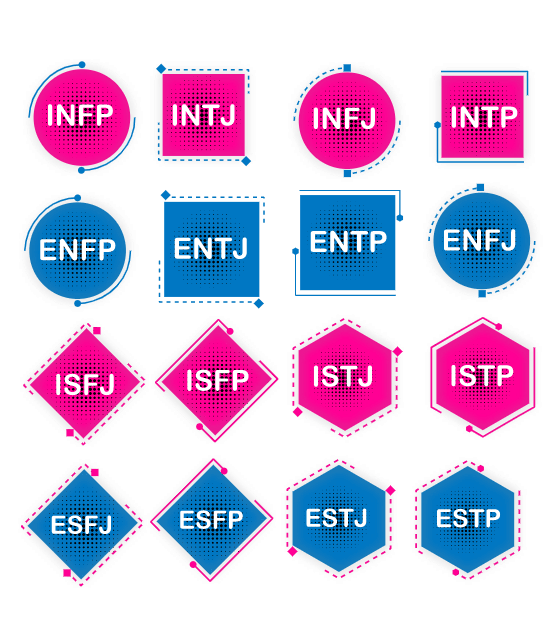
Our personality compatibility rating draws on the Jung / Myers-Briggs 16 personality types a psychometric framework with over a century of development. Carl Jung's 1921 work was refined by Isabel Briggs Myers and Katherine Briggs into the Myers-Briggs Type Indicator®, widely used today in organisational psychology.
DNA Romance applies this framework to predict potential connections between singles and couples - assigning higher compatibility scores to similar personality types, lower scores to those that tend to conflict.
Nøkkel forskningsartikler
Selected peer-reviewed studies underpinning the science behind DNA Romance.
Dandine-Roulland og medforfattere, 2019
Dandine-Roulland C, Laurent R, Dall'Ara I, Toupance B og Chaix R (2019)
Genomisk bevis for MHC disassortative parring hos mennesker.
Proceedings of the Royal Society B
Par i Nord-Europa har en tendens til å utvise MHC-ulikhet, noe som antyder biologisk innflytelse på partnervalg. Kulturelle og sosiale faktorer andre steder kan tilsløre det biologisk drevne mønsteret.
Birnbaum et al., 2019
Birnbaum GE, Zholtack K, Mizrahi M & Ein-Dor T (2019)
Den bitre pillen: Stopp av p-piller øker tiltrekningen til alternative partnere.
Evolutionary Psychological Science 5, 276–285
Hormonelle prevensjonsmidler endrer partnerpreferanser. Å slutte å bruke dem reverserer disse preferansene og øker tiltrekningen til genetisk kompatible menn, spesielt i perioder med høy fertilitet.
Wedekind, 2019
Wedekind C (2019)
Proc. R. Soc. B 285:20172714
Re-analysis of MHC-and-odour data showing odour pleasantness and intensity interact with MHC dissimilarity to influence social signalling - a more nuanced relationship between MHC, scent perception, and communication than earlier studies suggested.
Henningsson et al., 2017
Henningsson S et al. (2017)
Major histocompatibility complex (MHC) og seksuell partnervalg
Translational Psychiatry 7:e1118
Systematisk undersøkelse av MHC og seksuell seleksjon hos mennesker, som evaluerer forholdet mellom HLA-genotype og partnervalg på tvers av moderne populasjoner.
Christakis & Fowler, 2014
Christakis NA, Fowler JH (2014)
PNAS 111(suppl 3): 10796–10801
Venner deler genetisk likhet som kan sammenlignes med firmenninger. Antyder at sosiale bånd dannes langs subtile biologiske gradienter, ikke bare felles miljø - relevant for hvordan romantisk kompatibilitet strekker seg utover MHC.
Garver-Apgar et al., 2006
Garver-Apgar CE, Gangestad SW, Thornhill R, Miller RD, Olp JJ (2006)
Hovedhistokompatibilitetskompleks alleler, seksuell responsivitet og utroskap i romantiske par
Psychological Science 17:830-835
Par med større MHC-likhet rapporterte redusert seksuell respons og høyere grad av utroskap - direkte atferdskorrelat av MHC-kompatibilitet innenfor etablerte forhold.
Roberts et al., 2006
Roberts SC, Gosling LM, Carter V, Petrie M (2006)
MHC-korrelert luktpreferanser hos mennesker og bruken av p-piller
Proc. R. Soc. B 275:2715-2722
Kvinners MHC-korrelerte luktpreferanser inverteres ved bruk av hormonell prevensjon - de skifter mot MHC-lignende partnere i stedet for MHC-ulik dem.
Wedekind & Furi, 1997
Wedekind C, Furi S (1997)
Proc. R. Soc. B 264:1471-1479
Follow-up to the classic t-shirt study. Men and women evaluated odour samples from MHC-typed donors; preferences fell on MHC-dissimilar partners more often than chance - but the underlying signal favours heterozygosity rather than specific allele combinations.
Wu et al., 2018
Wu K, Chen C, Moyzis RK, Nuno M, Yu Z and Greenberger E (2018)
Evolution and Human Behavior. 39(4):447-456.
I en speed-dating kontekst viste kvinner, men ikke menn, preferanser for partnere basert på komplementaritet i Major Histocompatibility Complex (MHC) gjennom SNP-analyse, der ulike SNPer påvirket tiltrekning i en bestemt retning basert på nærhet til viktige HLA-gener. MHC-baserte indekser hadde en sammenlignbar innflytelse som selvrapporterte personlighetstrekk når det gjaldt å forutsi tilbud om en andre date for begge kjønn.
Burger og andre, 2017
Burger D, Meuwly C, Marti E, Sieme H, Oberthür M, Janda J, Meinecke-Tillmann S and Wedekind C (2017)
MHC-correlated preferences in diestrous female horses (Equus caballus)
Theriogenology. 89:318-323.
Denne studien undersøkte innflytelsen av Major Histocompatibility Complex (MHC) gener og testosteronnivåer på hunn hesters parpreferanser, og fant at hopper viste økt interesse for MHC-dissimile hester under deres diestrusfase (ikke-reproduktiv periode), men andre ikke-MHC knyttede mannlige egenskaper, muligens som fysiske attributter eller atferdsmessige signaler, kunne overstyre MHC-influenser under deres estrusfase (reproduktiv fase), med konteksten og syklusfasen som avgjørende i valg av partner.
Sherlock et al., 2016
Sherlock JM, Sidari MJ, Harris EA, Barlow FK, Zietsch BP (2016)
Testing the mate-choice hypothesis of the female orgasm: disentangling traits and behaviours .
Socioaffect Neurosci Psychol. 6:31562.
Studien antyder at kvinner opplever ulike frekvenser av orgasme med ulike partnere, der de som induserer høyere orgasmerater blir oppfattet som mer humoristiske, kreative, varme, trofaste og bedre lukter, og også er mer oppmerksomme på sin partners seksuelle tilfredshet, delvis støttende til hypotesen om partnervalg av kvinnelig orgasme som postulerer det som en potensiell mekanisme for å velge høykvalitets partnere.
Kromer et al., 2016
Kromer J, Hummel T, Pietrowski D, Giani AS, Sauter J, Ehninger G, Schmidt AH, Croy I (2016)
Influence of HLA on human partnership and sexual satisfaction .
Sci Rep. 6:32550.
Studien indikerer at hos mennesker kan HLA (en genetisk komponent av immunsystemet) ulikhet påvirke valg av partner og seksuell tilfredshet, potensielt gjennom oppdagelse av olfaktoriske signaler relatert til genetisk kompatibilitet, på lignende måte som mekanismer observert hos andre dyr, og fremme genetisk mangfold og motstandskraft mot patogener hos avkom.
Wlodarski and Dunbar., 2015
Wlodarski R. and Dunbar RIM. (2015)
What’s in a Kiss? The Effect of Romantic Kissing on Mate Desirability .
Evol Psychol. ; 12(1): 178–199.
Denne studien fant at oppfattet romantisk kyssingsevne påvirker vurderinger av potensielle partnere, og øker ønskeligheten, spesielt for kvinner i sammenhenger med tilfeldig sex. Selv om visuelle ledetråder kan overstyre innflytelsen av kyssing-relatert informasjon i visse paringsscenarier, ser innflytelsen av attraktive visuelle opplysninger ut til å være mer potent for menn enn for kvinner, noe som antyder den multifasetterte rollen til kyssing i å formidle partnerkvalitet og ønskelighet sammen med andre ledetråder.
Burger og andre, 2015
Burger D, Dolivo G, Marti E, Sieme H and Wedekind C (2015)
Proc. R. Soc. B 282:20150407
Denne studien undersøker hvordan det store histokompatibilitetskomplekset (MHC) påvirker mannlige reproduksjonsstrategier hos hester. Forskningen avslørte at når hingster ble utsatt for hunner med ulike MHC-typer, viste de høyere testosteronnivåer og produserte et større antall spermier per ejakulasjon sammenlignet med når de ble utsatt for MHC-liknende hopper, noe som fremhever at MHC-knyttede signaler faktisk kan påvirke mannlige testosteronproduksjon og sædkvalitet, og dermed påvirke reproduksjonsmetoder.
Laurent and Chaix., 2012
Laurent R and Chaix R (2012)
BioEssays. 34(4):267-71.
.
Lie et al., 2010
Lie HC, Simmons LH and Rhodes G (2010)
Genetic dissimilarity, genetic diversity, and mate preferences in humans .
Evolution and Human Behavior 31:8–58.
Denne studien utforsker innflytelsen av genetiske faktorer, spesielt det store histokompatibilitetskomplekset (MHC), på partnervalg hos mennesker, og avdekker at menn har en tendens til å foretrekke MHC-dissimile kvinner i både kortsiktige og langsiktige paringskontekster, mens genetisk mangfold påvirker både mannlige og kvinnelige partnerpreferanser på tvers av ulike paringskontekster, noe som støtter en betydelig rolle for MHC i menneskelig partnervalg og antyder at disse preferansene kan fungere for å øke det genetiske mangfoldet hos avkom.
Lie et al., 2010b
Lie HC, Rhodes G and Simmons LH (2010)
Is genetic diversity associated with mating success in humans ?
Animal Behaviour. 79, 4:903-909
Denne studien indikerer at hos mennesker, spesielt kvinner, er genetisk mangfold, spesielt innenfor det store histokompatibilitetskomplekset (MHC), assosiert med større paringssucces, målt ved antall seksuelle partnere, noe som støtter konseptet om at genetiske faktorer, potensielt relatert til immunforsvarets funksjon, spiller en rolle i menneskelig paringssucces, mens det ikke ble funnet noen signifikant assosiasjon hos menn.
Chaix et al., 2008
Chaix R, Cao C, and Donnelly P (2008)
Is Mate Choice in Humans MHC-Dependent ?
PLOS Genetics, 4 (9)
Studien indikerer at mens europeiske amerikanske befolkninger kan foretrekke MHC-dissimile partnere, som velger for mangfold i avkommets immunsystemer, så finnes ikke et slikt mønster i den undersøkte afrikanske befolkningen, noe som antyder at MHCs innflytelse på partnervalg kan være kontekstavhengig og potensielt formet av ulike faktorer.
Schwensow og medarbeidere, 2008
Schwensow N, Fietz J, Dausmann K, Sommer S (2008)
Evol Ecol. (22) 617-636
Studien utforsker partnervalg hos den fete haleklemmen, og finner at hunner foretrekker hanner med større MHC-genetisk variasjon og lavere MHC-overlapp som både sosiale og genetiske fedre, mens generell genetisk heterozygositet og beslektethet ikke signifikant påvirker partnervalg; ekstra-par paringer kan forekomme for å redusere genetisk inkompatibilitet, noe som fremhever et komplekst samspill mellom hypotesene "gode gener som heterozygositet" og "disassortativ paring" i primatenes paringsstrategier.
Wedekind., 2007
Wedekind C (2007)
The Major Histocompatibility Complex and Perfumers’ Descriptions of Human Body Odors
Evolutionary Psychology.5(2): 330-343
Dette eksperimentet avdekker en forbindelse mellom Major Histocompatibility Complex (MHC) og de verbale beskrivelsene av menneskelige kroppslukter, og viser at profesjonelle parfymer kan, til en viss grad, artikulere MHC-korrelerte kroppsluktkomponenter, noe som understreker MHCs innflytelse på menneskelig olfaktorisk oppfatning og muligens, valg av partner, gitt MHCs kritiske rolle i immunsystemets funksjon og tidligere noterte innvirkning på kroppslukt og partnervalg.
Wedekind., 2006
Wedekind C (2006)
The Intensity of Human Body Odors and the MHC: Should We Expect A Link ?
Evolutionary Psychology. 4:85-94
Denne forskningen skiller mellom forholdene mellom noen MHC (Major Histocompatibility Complex) gener og intensiteten og behageligheten av menns kroppslukter, og oppdager at menn med minst ett homozygot MHC-antigen ikke avgir merkbart mer intense lukter enn heterozygoter, men deres dufter oppfattes som betydelig sterkere av kvinner med ulik MHC.
Pause et al., 2006
Pause BM, Krauel K, Schrader C, Sojka B, Westphal E, Mu¨ller-Ruchholtz W, and Ferstl R. (2006)
Proc. R. Soc. B (2006) 273, 471–478 doi:10.1098/rspb.2005.3342
This study reveals that humans subconsciously detect and respond to body odors from individuals with similar HLA (Human Leucocyte Antigen) genetic markers, which might play a critical role in social interactions and mate selection by acting as subtle social signals within both same-sex and opposite-sex relationships..
Martins et al., 2005
Martins Y, Preti G, Crabtree CR, Runyan T, Vainius AA and Wysocki CJ (2005)
Preference for Human Body Odors Is Influenced by Gender and Sexual Orientation .
Psychological Science, 16(9) 694-702
Denne studien viser at seksuell orientering og kjønn påvirker individers preferanser for menneskelige kroppslukter, med heteroseksuelle og homofile menn og kvinner som viser distinkte to-valgs preferanser når de blir presentert for kroppslukter fra individer med forskjellige kombinasjoner av kjønn og seksuell orientering, noe som antyder at kroppslukt kan være en faktor i valg av seksuelle og sosiale partnere.
Horton et al., 2004
Horton R, Wilming L, Rand V, Lovering RC, Bruford EA, Khodiyar VK, Lush MJ, Povey S, Talbot CC Jr, Wright MW, Wain HM, Trowsdale J, Ziegler A, Beck S (2004)
Gene map of the extended human MHC.
Nat Rev Genet 5(12):889-899
This study characterises an integrated gene map of the extended human MHC, a pivotal region in the vertebrate genome for infection and autoimmunity due to its essential role in both adaptive and innate immunity, highlighting its significant content related to paralogy, polymorphism, immune functionality, and its association with various diseases, providing a comprehensive view stemming from the assimilation of data from several large-scale studies..
Jacob et al., 2002
Jacob S, McClitock MK, Zelano B and Ober C (2002)
Paternally inherited HLA alleles are associated with woman’s choice of male odour .
Nature Genetics, 30:175
This study demonstrates that women can discern differences in male body odor influenced by a single variance in HLA (human MHC) allele, with a woman's capacity to distinguish and prefer certain odors notably being based on HLA alleles inherited from her father and not her mother; this suggests that paternally inherited HLA-associated odors influence odor preference and might function as social cues, even despite a milieu of potential odors derived from a variety of genetic and cultural factors..
Milinski and Wedekind., 2001
Milinski M and Wedekind C (2001)
Evidence for MHC-correlated perfume preference in humans .
Behavioural Ecology 12(2):140-149
Studien utforsker forholdet mellom Major Histocompatibility Complex (MHC) genotyper og parfymepreferanser hos mennesker. De oppdaget en bemerkelsesverdig korrelasjon mellom en persons MHC (spesielt HLA-A, -B, -DR) og deres vurderinger av ulike dufter for personlig bruk, med visse HLA-typer (f.eks. HLA-A2) som viser konsistente duftpreferanser. Imidlertid, når det gjaldt preferanser for en partners duft, var korrelasjonen stort sett ubetydelig, noe som samsvarer med hypotesen om at individer velger parfymer for personlig bruk for muligens å forbedre eller forsterke sine egne immunogenetiske avslørende kroppslukter, snarere enn å endre de oppfattede duftene til sine partnere.
Wedekind et al., 1995
Wedekind C, Seebeck T, Bettens F And Paepke AJ (1995)
MHC-dependent mate preferences in humans.
Proc.R.Soc.Lond.B. 260:245-249.
Denne studien fant at folk har en tendens til å foretrekke kroppsluktene til potensielle partnere som har forskjellige immunsystemgener enn sine egne, men denne preferansen endres for kvinner på prevensjon.
Jokiniemi et al., 2020
Jokiniemi A, Magris M, Ritari J, Kuusipalo L, Lundgren T, Partanen J and Kekäläinen J (2020)
Proc. R. Soc. B 287:20201682
* fant at spermavitalitet var assosiert med partneres HLA-dissimilaritet, noe som indikerer at livmorhalsens slim kan selektivt legge til rette for senere gametfusjon mellom immunogenetisk kompatible partnere
Mosaad et al., 2011
Mosaad YM, Abdel-Dayem Y, El-Deek BS and El-Sherbini SM (2011)
Forbindelse mellom HLA-E *0101 homozygositet og tilbakevendende spontanabort hos egyptiske kvinner
Scand J Immunol. 2011 Aug;74(2):205-9. doi: 10.1111/j.1365-3083.2011.02559.x.
* found an increased frequency of homozygosity for HLA-E*0101 in Egyptian women with RM
Mora-Sánchez og medarbeidere, 2019
Mora-Sánchez A, Aguilar-Salvador D, Nowak I (2019)
NPJ Digit Med Mar 7;2:12.
* foreslo en genetisk risikoberegning som kunne forutsi tilbakevendende spontanabort (RM) basert på analyse av HLA haplotyper fra par med enten historikk med vellykkede graviditeter eller RM
Meuleman et al., 2015
Meuleman T, Lashley LE, Dekkers OM, van Lith J, Claas FH and Bloemenkamp KW (2015)
Hum Immunol. May;76(5):362-73.
* utførte en meta-analyse av 41 studier og viste at HLA-B deling og HLA-DR deling begge var assosiert med forekomsten av RM
Shankarkumar et al., 2008
Shankarkumar U, Pawar A, Gaonkar P, Parasannavar D, Salvi V, and Ghosh K (2008)
HLA allel assosiasjoner hos pasienter med idiopatisk tilbakevendende spontanabort fra India
J Hum Reprod Sci. 2008 Jan;1(1):19-24.
* identifiserte differensiert assosiasjon av alleler i HLA-A, HLA-B, HLA-C, og HLA-DRB1 sammenlignet med rapporterte verdens RSA-pasienter
Ober, 1999
Ober C (1999)
Studier av HLA, fruktbarhet og partnervalg i en menneskelig isolat
Hum Reprod Update 5(2):103-107.
* beskriv forholdet mellom HLA-likhet på individuelle alleler, samt HLA-haplotyper som indikatorer for økt risiko for foster tap blant Hutterite-par
Ober et al., 1998
Ober C, Hyslop T, Elias S, Weitkamp LR, Hauck WW (1998)
Menneskelig leukocyttantigenmatching og foster tap: resultater av en 10-årig prospektiv studie
Human Reproduction, Volume 13, Issue 1, Jan 1998, Pages 33-38
* resultater fra en 10-årig studie som viste økte fosteravgangsrater blant Hutterite-par som matcher for HLA-antigener
Ober et al., 1993
Ober., Steck., Ven., Billstrand., Messer., Kwak., Beaman., Beer (1993)
Journal of Reproductive Immunology, Volume 25, Issue 3, December 1993, Pages 195-207
* viste økte rater av tilbakevendende spontanabort blant Hutterite-par som matcher for HLA-DQA1 alleler
Lok., 2012
Lok C (2012)
Career development: What's your type ?
Nature, 488: 545-547
* Artikkelen fremhever bruken av Myers-Briggs Type Indicator og lignende personlighetstester for å hjelpe forskere med å forbedre sine myke ferdigheter og navigere i karrierene sine ved å gi innsikt i deres personlighetstrekk, som kan informere deres kommunikasjon, lederskap og teamarbeidsstrategier innen profesjonelle miljøer.
Keirsey., 2006
Keirsey, D (2006)
Please Understand Me II (3rd ed) .
Promethius Nemesis Book Co., Del Mar, CA.
Vennligst forstå meg er en psykologibok av David Keirsey og Marilyn Bates som bruker et selv-vurdert spørreskjema, Keirsey Temperament Sorter, for å kategorisere individer inn i en av seksten personlighetstyper og fire bredere temperamenttyper (Artisan, Guardian, Rational og Idealist), og tilbyr lesere innsikt i deres atferdsmønstre og grunnleggende verdier, samtidig som den bygger på og forenkler tidligere psykologiske teorier og typeindikatorer, spesielt Myers-Briggs Type Indicator.
Moutafi et al., 2003
Moutafi J, Furnham A, and Crump J (2003)
European Journal of Personality, 17:79-94
...
Myers et al., 1998
Myers IB, McCaulley MH, Quenk NL and Hammer AL (1998)
MBTI manual: A guide to the development and use of the Myers-Briggs Type Indicator .
Consulting Psychologists Press, Palo Alto, CA, Vol. 3.
'MBTI®-håndboken, tredje utgave, fungerer som en omfattende guide som detaljerer utviklingen, anvendelsen og tolkningen av Myers-Briggs Type Indicator®-instrumentet, og gir grundig informasjon om teorien, påliteligheten og gyldigheten til verktøyet, samt tilbyr innsikt i de 16 personlighetstypene det identifiserer, alle forfattet av ledende eksperter innen psykologisk type, Isabel Briggs Myers, Mary H. McCaulley, Naomi L. Quenk og Allen L. Hammer.'
Myers et al., 1985
Myers IB, McCaulley MH and Most R (1985)
Manual, en guide til utviklingen og bruken av Myers-Briggs typeindikator.
Konsulterende psykologers presse
The 1985 edition, 'Manual: A Guide to the Development and Use of the Myers-Briggs Type Indicator,' introduces and elucidates the Myers-Briggs Type Indicator (MBTI®), designed to render C. G. Jung's psychological type theory comprehensible and applicable in daily life, underlining the principle that behavioral variations, while seemingly sporadic, are consistently orderly, deriving from intrinsic differences in individuals’ preferred use of perception and judgment.
Myers., 1962
Myers IB (1962)
Manual, en guide til utviklingen og bruken av Myers-Briggs typeindikator.
Consulting Psychologists Press .
The 1962 manual for the Myers-Briggs Type Indicator provides comprehensive insights and guidelines for implementing C. Jung’s theory of psychological types, asserting that behavioral variations are systematic and consistent due to basic perceptual and judgmental preferences, aiming to leverage these preferences through self-reports to ascertain individual psychological types, thereby enabling the practical application and research into their effects on reactions, motivations, values, and capabilities.
Jung., 1923
Jung CG (1923)
Psykologiske typer: eller psykologien til individuasjon
Oxford, England: Harcourt, Brace .
Psychological Types by Carl Gustav Jung, first published in 1923, introduces the seminal psychological theory of psychological types, presenting a framework that seeks to explain the diverse and seemingly random differences in personality through a systematic and orderly theory, proposing that fundamental variations in human behavior arise due to inherent differences in how individuals prefer to utilize their cognitive functions of perception and judgment, laying the groundwork for numerous personality theories and assessments to come, notably the Myers-Briggs Type Indicator (MBTI).
Ready to find your DNA-compatible match?
Upload your DNA file or enter your personality type - and start matching tonight.
Prøv DNA Romance nå